Behind the Scenes: Crafting Our Custom Voxel Engine
An in-depth technical dive into building a high-performance rendering pipeline and procedural world generator from the ground up for our upcoming RPG.
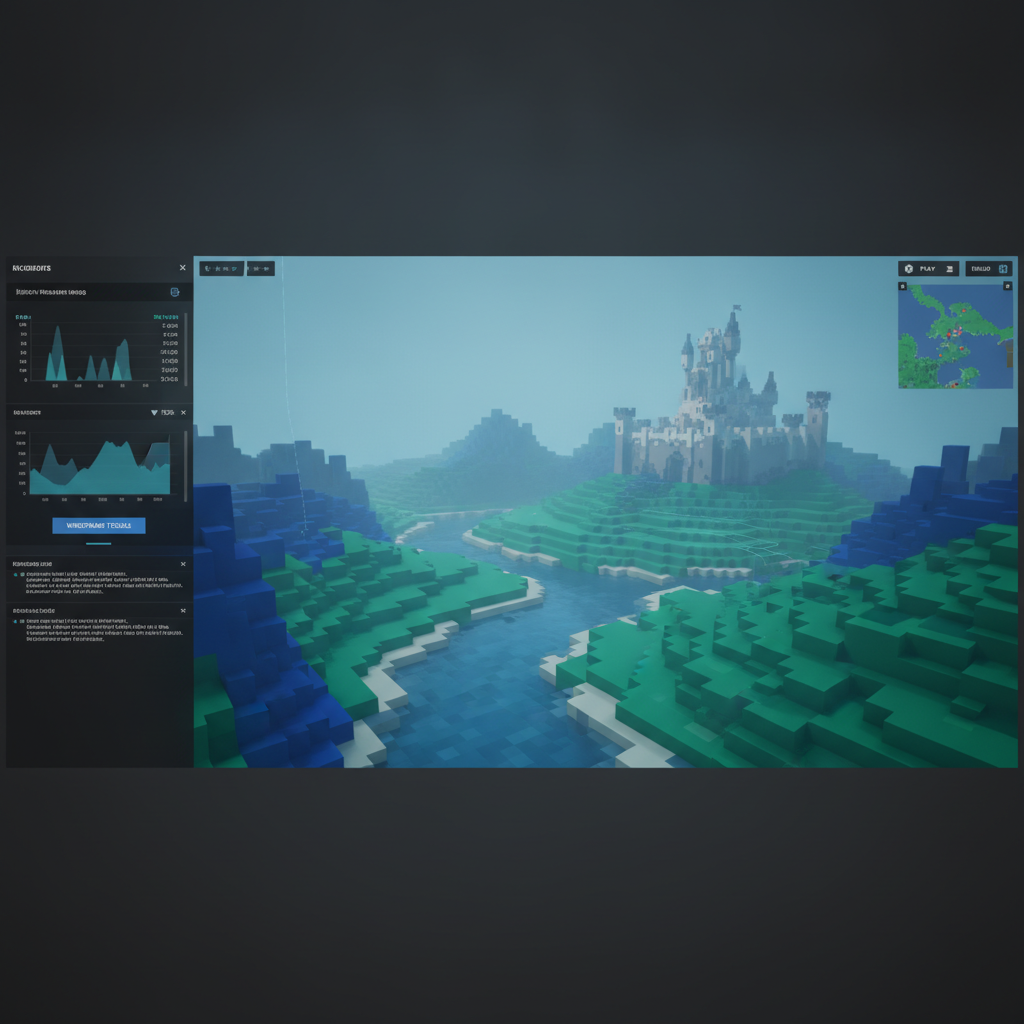
1. The Allure of the Block: Why We Built Our Own Voxel Engine
When we set out to design our upcoming retro-futuristic RPG, we knew standard commercial engines wouldn’t cut it. Most off-the-shelf game development suites are tailored heavily toward traditional polygon meshes. They struggle out-of-the-box when handling millions of dynamic, destructible cubes. We didn’t want a game that merely simulated voxels on top of a standard renderer—we demanded a specialized architecture where the voxel is the foundational primitive.
By committing to custom voxel game development, we gained absolute control over memory layout, thread utilization, and rendering pathways. This technical autonomy is crucial for achieving our gameplay goals: a fully destructible environment, real-time lighting propagation, and massive draw distances that capture the vast scale of our procedural worlds.
The Core Thesis
“Commercial engines abstract the hardware to fit all genres. A specialized voxel engine structures the hardware specifically to manage spatial coordinates, maximizing cache locality and pipeline execution speed.”
2. Taming the Poly-Count: High-Performance Voxel Rendering
The primary bottleneck in voxel engine programming is geometric complexity. A 512x512x256 chunk of voxels contains over 67 million potential blocks. If you render every face of every block, even modern GPUs will quickly grind to a halt.
Our solution combines aggressive greedy meshing and Sparse Voxel Octrees (SVOs). Greedy meshing analyzes adjacent voxel faces of the same type and combines them into single, larger polygons. This reduces our vertex count by up to 90% in dense areas. Concurrently, SVOs allow us to frustum-cull entire branches of empty space before they ever reach the graphics card.
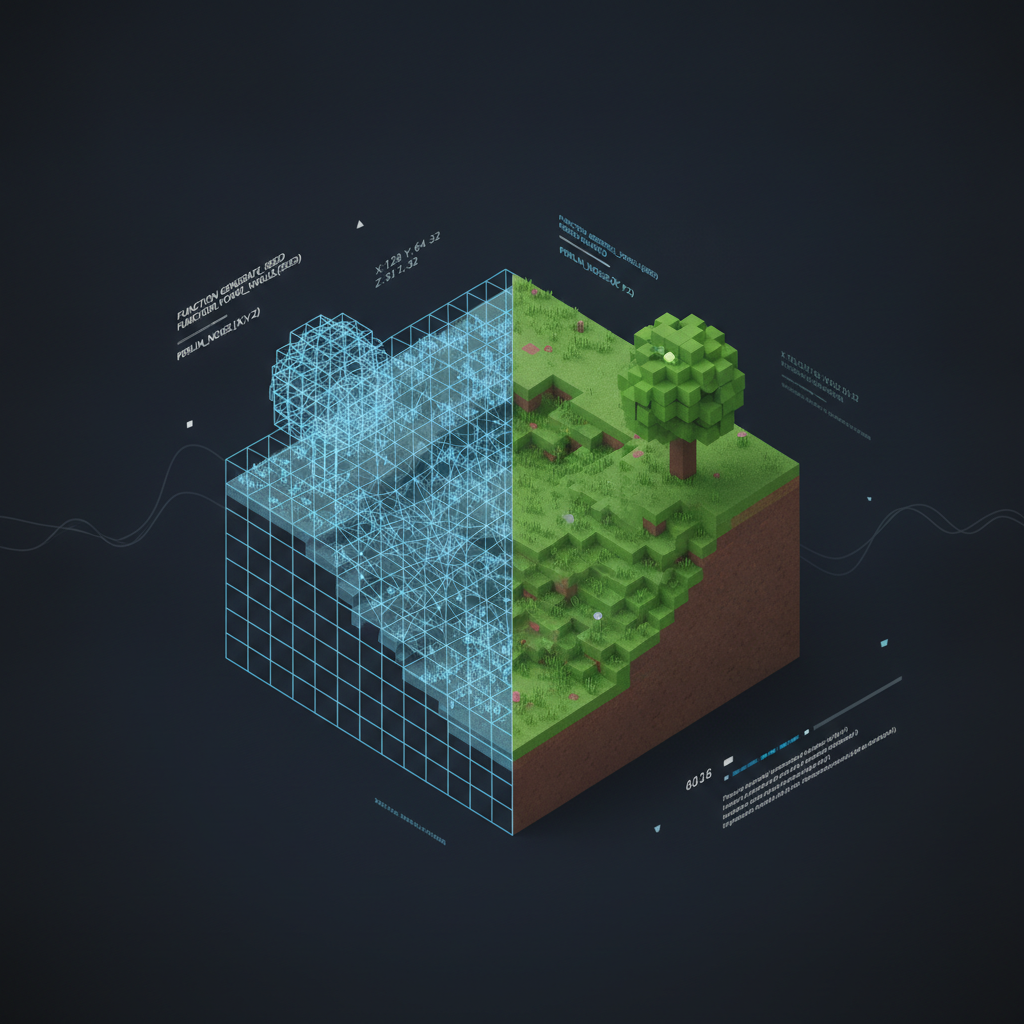
3. Beyond Noise Functions: Crafting Infinite, Biome-Rich Worlds
Simple Perlin or Simplex noise is great for rolling hills, but it lacks the structural narrative required for an engaging RPG. For our game, we developed a multi-layered procedural generation system. We stack heightmaps, moisture maps, and temperature layers to establish broad biomes, then deploy cellular automata and domain warping to carve out realistic geological features like deep ravines, jagged cliffs, and natural cave networks.
To ensure this heavy math doesn’t stall gameplay, the generator runs entirely on background worker threads asynchronously. As the player traverses the world, the engine seamlessly builds and stitches chunks together, prioritizing the player’s immediate field of view to prevent pop-in. This blend of low-level game programming optimization and high-level generation algorithms is what makes our world feel endlessly organic yet structurally coherent.
Thread Allocation Map
Thread 01: Main Loop & Render Dispatch
Thread 02-04: Asynchronous Voxel Meshing
Thread 05-08: Noise Evaluation & Procedural World Gen
4. Indie Game Reality Check: The Costs of Custom Engine Architecture
We must be transparent: pursuing proprietary technology in indie games is a double-edged sword. While major studios rely on licensed middleware to accelerate development, writing an engine from scratch means you are responsible for everything—from input handling and sound spatialization to physics collisions and asset serialization.
We spent nearly nine months writing code and debugging memory leaks before we could even render a single character model on screen. However, the ultimate payoff is unmatched. By bypassing the bloat of general-purpose engines, we have built a lean, highly targeted toolset designed specifically to bring our exact vision to life.
5. What’s Next: Fully Destructible Environments
Now that our rendering and generation foundations are locked down, we are actively implementing our structural stress-physics system. Soon, players will be able to breach dungeon walls, collapse bridges dynamically, and leave permanent, physical scars on the voxel world.
Join Our Technical Playtests
Are you an indie game enthusiast, a programmer, or a gamer who loves complex mechanics? Sign up for our closed pre-alpha technical test to help push our custom engine to its limits.
ACCESS PLAYTEST TERMINAL